

Like in real life, we have seasons. So do email campaigns! Today’s savvy marketers understand the power of lifecycle emails—a strategic approach that nurtures customers through every stage of their journey with a brand. Join us as we delve deep into the craft of planning this unique campaign. It’ll provide you with the knowledge and tools to transform prospects into loyal brand advocates.
What are Lifecycle Email Campaigns?

Photo by Angela Roma from Pexels
This type of email campaign is a series of targeted, automated messages designed to guide customers through their entire journey with your brand. Compared to traditional email marketing’s short-term goals or isolated promotions, lifecycle campaigns are holistic and have a long-term view of the customer relationship. They aim to deliver the right message, to the right person, at the right time. It creates a personalised experience that resonates with each individual’s needs and preferences.
The power of lifecycle email campaigns lies in their ability to anticipate and address customer needs at every touchpoint. From the moment a prospect first encounters your brand, to the point where they become a vocal advocate, these campaigns provide relevant, valuable content that nurtures your relationship. Align your email strategy with the customer journey and watch your conversion rates increase, boost customer loyalty, and ultimately drive long-term revenue growth.
Mapping the Customer Journey
Before diving into the specifics of email creation, it’s crucial to understand the various stages of the customer journey. While the exact path may vary depending on your industry and business model, a typical customer journey includes the following stages:
- Awareness: The customer becomes aware of a problem or need and begins researching potential solutions.
- Consideration: The customer evaluates different options and narrows down their choices.
- Decision: The customer makes a purchase decision and becomes a first-time buyer.
- Retention: The customer uses the product or service and may make repeat purchases.
- Advocacy: Satisfied customers become brand advocates, recommending your products or services to others.
To create an effective lifecycle email campaign, you need to map out these stages and identify key touchpoints where email communication can make a significant impact. This process involves analysing customer behaviour, preferences, and pain points at each stage. Use data from your CRM, website analytics, and customer feedback to gain insights into the customer journey and inform your email strategy.
Crafting Emails for Each Stage: Prospect, Lead, Customer, Loyal Customer, Promoter
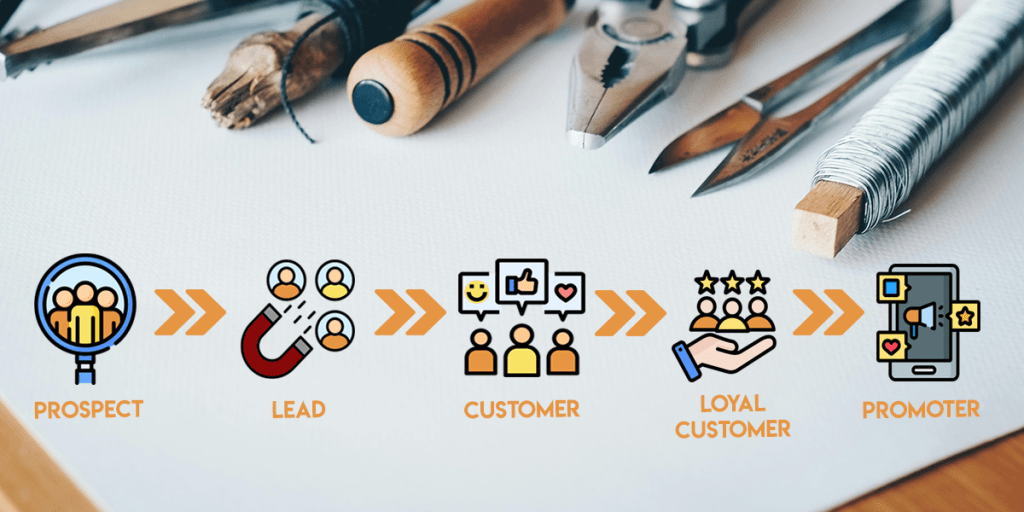
Now that we’ve outlined the customer journey, let’s explore how to craft compelling emails for each stage. These five elements follow a linear line that gives you a clear picture of how you can approach your audience.
Prospect Stage
At this stage, your goal is to introduce your brand and establish trust. Focus on educational content that addresses the prospect’s pain points and positions your brand as a solution provider. Examples of effective emails at this stage include:
- Welcome series introducing your brand story and values
- Educational newsletters showcasing industry insights
- Downloadable resources such as whitepapers or e-books
Key elements to include: Clear value proposition, social proof, and a soft call-to-action to learn more.
Lead Stage
As prospects show interest and become leads, your emails should focus on nurturing the relationship and guiding them towards a purchase decision. Consider the following email types:
- Product or service spotlights highlighting key features and benefits
- Case studies demonstrating real-world applications and results
- Limited-time offers or promotions to create urgency
Key elements to include: Personalised product recommendations, customer testimonials, and clear calls-to-action for demos or free trials.
Customer Stage
Once a lead becomes a customer, your email strategy should shift to onboarding, support, and encouraging repeat purchases. Consider these email types:
- Onboarding series to ensure successful product adoption
- Post-purchase follow-ups to gather feedback and offer support
- Cross-sell and upsell recommendations based on purchase history
Key elements to include: Detailed product usage tips, personalised recommendations, and easy access to customer support resources.
Loyal Customer Stage
For customers who have made multiple purchases or shown long-term engagement, focus on deepening the relationship and increasing their lifetime value. Examples include:
- Exclusive access to new products or features
- VIP program invitations with special perks
- Personalised content based on their interests and past interactions
Key elements to include: Recognition of their loyalty, exclusive offers, and opportunities for deeper engagement with your brand.
Promoter Stage
Turn your most loyal customers into brand advocates by encouraging them to share their experiences. Consider these email types:
- Referral program invitations with incentives
- User-generated content campaigns
- Exclusive “insider” updates on company news or product development
Key elements to include: Clear instructions on how to participate, rewards for advocacy, and a sense of being part of an exclusive community.
Best Practices for Personalisation and Segmentation
The success of your email campaigns hinges on their relevance to each recipient. Personalisation and segmentation are crucial tools for achieving this relevance. Here are some best practices to consider:
Data Collection and Management
Start by collecting and organising customer data from various touchpoints, including website interactions, purchase history, and email engagement. Use a robust CRM system to centralise this data and create comprehensive customer profiles. Ensure compliance with data privacy regulations like GDPR and CCPA.
Behavioural Segmentation
Go beyond basic demographic segmentation and focus on behavioural data. Categorise your audience based on factors like:
- Past purchase behaviour
- Email engagement levels
- Website browsing patterns
- Product usage (for SaaS or digital products)
This granular segmentation allows you to create highly targeted campaigns that resonate with specific user behaviours and preferences.
Dynamic Content
Implement dynamic content blocks in your emails that change based on the recipient’s profile and behaviour. This could include personalised product recommendations, location-specific offers, or content tailored to the customer’s industry or job role.
Predictive Personalization
Leverage AI and machine learning algorithms to predict future customer behaviour and preferences. Use these insights to deliver proactive recommendations and offers that anticipate the customer’s needs.
Testing and Optimisation
Continuously test different personalisation strategies and segmentation approaches. Use A/B testing to refine your email content, subject lines, and send times for each segment. Regularly analyse the results and iterate on your approach to improve performance over time.
Measuring Success: Key Metrics and KPIs
To ensure the effectiveness of your lifecycle email campaigns, it’s essential to track and analyse key performance indicators (KPIs). Here are some crucial metrics to monitor:
Engagement Metrics
- Open Rate: Measure the percentage of recipients who open your emails. Segment this by campaign type and customer stage to identify trends.
- Click-Through Rate (CTR): Track the percentage of recipients who click on links within your emails. This indicates the relevance and appeal of your content.
- Conversion Rate: Monitor the percentage of email recipients who complete desired actions, such as making a purchase or signing up for a demo.
Customer Lifecycle Metrics
- Customer Lifetime Value (CLV): Measure the total revenue generated by a customer over their entire relationship with your brand. Track how lifecycle email campaigns impact CLV over time.
- Retention Rate: Calculate the percentage of customers who continue to engage with your brand over a specific period. Compare retention rates for customers who receive lifecycle emails versus those who don’t.
- Net Promoter Score (NPS): Gauge customer loyalty and satisfaction by asking how likely they are to recommend your brand to others.
Revenue Metrics
- Revenue per Email: Calculate the average revenue generated by each email sent in your lifecycle campaigns.
- Return on Investment (ROI): Measure the overall financial impact of your lifecycle email campaigns by comparing the revenue generated to the costs of implementation and maintenance.
Campaign-Specific Metrics
- Stage Progression Rate: Track how effectively your emails move customers from one lifecycle stage to the next.
- Reactivation Rate: For campaigns targeting dormant customers, measure the percentage of recipients who re-engage with your brand.
Regularly review these metrics and use the insights to refine your lifecycle email strategy. Pay attention to trends over time and correlate email performance with overall business outcomes.
Case Study: Successful Lifecycle Campaign Example
To illustrate the power of lifecycle email campaigns, let’s examine a successful implementation by a fictional e-commerce company, “GreenThumb Gardening Supplies.”
Background
GreenThumb, an online retailer of gardening tools and supplies, faced challenges with customer retention and repeat purchases. They decided to implement a comprehensive lifecycle email campaign to address these issues and increase customer lifetime value.
Strategy
GreenThumb mapped out their customer journey and developed a series of targeted email campaigns for each stage:
- Welcome Series: A 3-email sequence introducing new subscribers to the brand, sharing gardening tips, and offering a first-purchase discount.
- Seasonal Campaigns: Targeted emails based on the gardening season and the customer’s location, offering relevant products and advice.
- Post-Purchase Nurture: A series of emails providing care instructions for purchased plants, complementary product suggestions, and requests for reviews.
- Re-engagement Campaign: Targeted emails to dormant customers, featuring new product lines and exclusive “comeback” offers.
- Loyalty Program: VIP emails for frequent customers, including early access to sales, personalised gardening advice, and referral incentives.
Implementation
GreenThumb used a combination of behavioural segmentation and dynamic content to ensure relevance. They integrated their e-commerce platform with their email marketing tool to leverage real-time data for personalisation. A/B testing was employed to optimize subject lines, send times, and content for each campaign.
Results
After six months of running the lifecycle email campaigns, GreenThumb saw significant improvements:
- 30% increase in customer retention rate
- 25% boost in average order value for repeat customers
- 40% reduction in customer churn
- 50% increase in referral traffic from email subscribers
- 20% improvement in overall email engagement rates
The success of GreenThumb’s lifecycle email strategy demonstrates the potential impact of a well-executed, personalised approach to customer communication throughout the entire journey.
Tools and Technologies for Automation
Implementing effective lifecycle email campaigns requires the right set of tools and technologies. Here’s an overview of the key categories and some popular options:
Email Service Providers (ESPs)
ESPs form the backbone of your email marketing efforts, providing the infrastructure to send, track, and manage your campaigns. Look for providers that offer advanced segmentation, automation, and integration capabilities. Popular options include:
- Mailchimp
- Klaviyo
- HubSpot
- Salesforce Marketing Cloud
- ActiveCampaign
Customer Relationship Management (CRM) Systems
A robust CRM is essential for managing customer data and interactions across all touchpoints. Integration between your CRM and ESP enables seamless data flow for personalization and segmentation. Consider these options:
- Salesforce
- HubSpot CRM
- Zoho CRM
- Pipedrive
Customer Data Platforms (CDPs)
CDPs help unify customer data from various sources, providing a single, comprehensive view of each customer. This is particularly useful for complex lifecycle campaigns that require data from multiple touchpoints. Leading CDPs include:
- Segment
- Bloomreach
- Tealium
- BlueConic
- Adobe Real-Time CDP
Marketing Automation Platforms
These platforms offer advanced automation capabilities, allowing you to create complex, multi-step campaigns based on customer behaviour and attributes. Some top choices are:
- Marketo
- Pardot
- Eloqua
- Iterable
Analytics and Optimisation Tools
To measure and improve the performance of your lifecycle campaigns, consider using dedicated analytics and optimisation tools such as:
- Google Analytics
- Mixpanel
- Optimizely
- Hotjar
AI and Machine Learning Tools
Leverage the power of AI to enhance personalization and predictive capabilities in your campaigns. Some innovative tools in this space include:
- Persado (AI-powered content generation)
- Phrasee (AI-driven subject line optimization)
- Albert (AI marketing platform)
When selecting tools for your lifecycle email campaigns, consider factors such as scalability, integration capabilities, ease of use, and alignment with your specific business needs and budget. It’s often beneficial to start with a core set of integrated tools and expand your tech stack as your campaigns become more sophisticated.
You’re Ready to Implement Your Own Lifecycle Email Strategy

Lifecycle email campaigns represent a powerful approach to nurturing customer relationships that drive your long-term business growth. Follow these key steps to significantly enhance your engagement, customer loyalty, and ultimately, revenue:
- Map Your Customer Journey: Thoroughly analyze your customers’ path from initial awareness to advocacy, identifying key touchpoints and opportunities for email communication.
- Develop Targeted Content: Create compelling, stage-specific email content that addresses the unique needs and motivations of customers at each point in their journey.
- Implement Personalisation and Segmentation: Leverage customer data to deliver highly relevant, individualised experiences that resonate with each recipient.
- Choose the Right Technology Stack: Select and integrate the tools necessary to automate, personalize, and analyze your lifecycle email campaigns
If you want to save time and focus on your other processes instead of doing these yourself, our email experts can help you! Book a consultation with us and find out how to personalise your lifestyle email campaign today.